Industrial and Commercial Sauce Making Equipment
Which technology do you need?
There is currently no equipment listed with your specified properties, but we are sure we can help you. Try us! Contact us
Tell us about your production challenge
Process base ingredients before reducing them into a sauce
Sauce making equipment applies the principle of reduction at an industrial scale. This involves cooking down a base liquid and aromatics to concentrate and meld flavors.
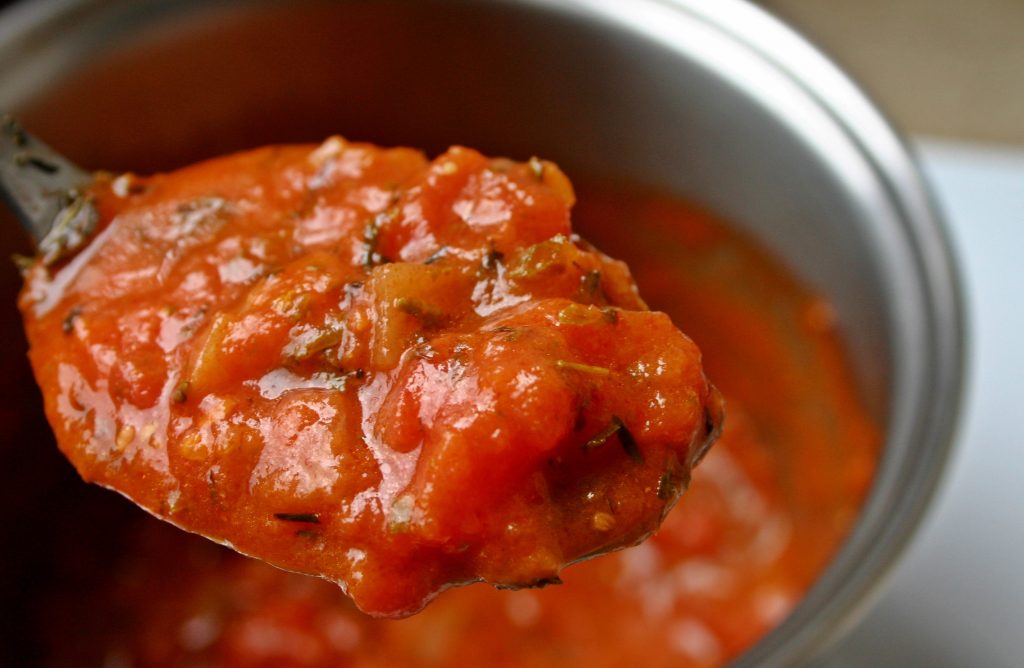
Vegetable and fruit-based sauces need technology that can handle fresh products, even if they can also be made with concentrates, frozen or aseptic packaged products. The ingredients are ground into smaller pieces and then juiced into a liquid. A strainer removes unwanted residues, such as seeds or stems, before they go for cooking.
Mixers are essential sauce making equipment for emulsified products
Emulsified sauces such as Hollandaise, Bechamel, or Mayonnaise develop their rich mouthfeel by suspending fat in water.
These sauces are produced by rapidly mixing suspended butter or oil into egg yolks. The dispersion breaks the butter or oil into tiny droplets held in suspension by lecithin content in the emulsifier.
Treat tomato-based sauces with heat to inactivate enzymes
Tomatoes are the quintessential sauce base. They can be processed into concentrates, ketchup, pasta sauces, and peeled tomatoes. Harvested tomatoes are sorted, washed, and milled to prepare them for production. Peeled tomatoes are scalded before skinning, while chopped and diced tomatoes go through a stainless steel cutter.
After crushing or emulsifying with augers, the tomato mixture goes to a hot break treatment unit for enzymatic inactivation. This essential sauce making equipment balances the consistency and viscosity of the sauce. The mixture is then refined, concentrated through evaporation, and pasteurized or sterilized.
Adapt the mixer with a whisking arm to emulsify vinaigrettes
Vinaigrettes and salad dressings are produced in two different steps. First, the flavor makers, spices, and preservatives are premixed with a liquid base like water or vinegar. The mixture is then dispersed into a continuous phase.
The second step is to extend with oil while whisking rapidly in a mixer. This dispersion method creates a more homogeneous emulsion. Finally, add stabilizers like pectin to thicken the sauce.
Use sterile packaging to extend the shelf-life of your sauce
Aseptic processing is a technique to thermally sterilize your sealed jars, making shelf-stable products that do not need refrigeration.
Alternatively, apply a hot-fill solution to sterilize your products. The heat from the injected hot liquid destroys microorganisms both in the sauce and the container. However, only high-acid sauces can go without refrigeration in this case. Another option is retort processing, where non-sterile products are filled into non-sterile packaging and sterilized in an autoclave with pressurized steam.
Let's talk about your project!