Pharmaceutical Manufacturing Equipment
Which technology do you need?
There is currently no equipment listed with your specified properties, but we are sure we can help you. Try us! Contact us
Tell us about your production challenge
Pharmaceutical production equipment over time: opportunities and constraints
Long development time, complex research, and an uncertain future. Pharmaceutical manufacturing involves processes that usually take 10 to 15 years to be developed and tested. Even so, there is no guarantee of approval from the authorities when it comes to increasing the production, following the correct directives, to a larger public. Out of all drugs that go through the step of clinical trials, only 20% of them receive authorities’ green light to scale up.
Pharmaceutical production evolved significantly compared to the early 19th century, when morphine was discovered. Uncountable findings have already improved people’s health and well-being conditions. But to guarantee that producers consistently meet the appropriate levels of quality, efficacy, and safety, strict requirements in the pharmaceutical industry have limited the production methods and restricted manufacturing equipment. Any slight change in the form of manufacturing requires you to get new permissions, which may slow down the production process. New developments in pharmaceutical machinery, however, are unavoidable and necessary for the continuous progress of the industry.
What type of machinery do you need for granulation?
Among the most crucial and challenging manufacturing processes is granulation, which the industry uses to produce dosage forms, especially tablets and capsules. You start the production by mixing the powder ingredients and the active pharmaceutical ingredients, then use a dryer to remove water and other solvents which can enhance the chemical and microbiological degradation of the products. Granulation comes after that. It consists of enlarging fine particles using agglomeration to get granules, which provide API uniformity and decreases the volume per unit weight of the blend. That, in its turn, makes it easier to store and ship.
The process can be wet or dry, depending on whether you use a liquid (such as a solvent or a binder), and the results are intermediary-size particles, ranging from 0.2-0.5mm. High shear mixers and fluidized beds are some of the pharmaceutical industry equipment used for granulation. The next steps for the particles might be either packaging as dosage form or mixing with other substances to then proceed with tablet pressing or capsule filling steps.
Keeping it clean: how to adhere to the required sterilization levels in pharmaceutical production
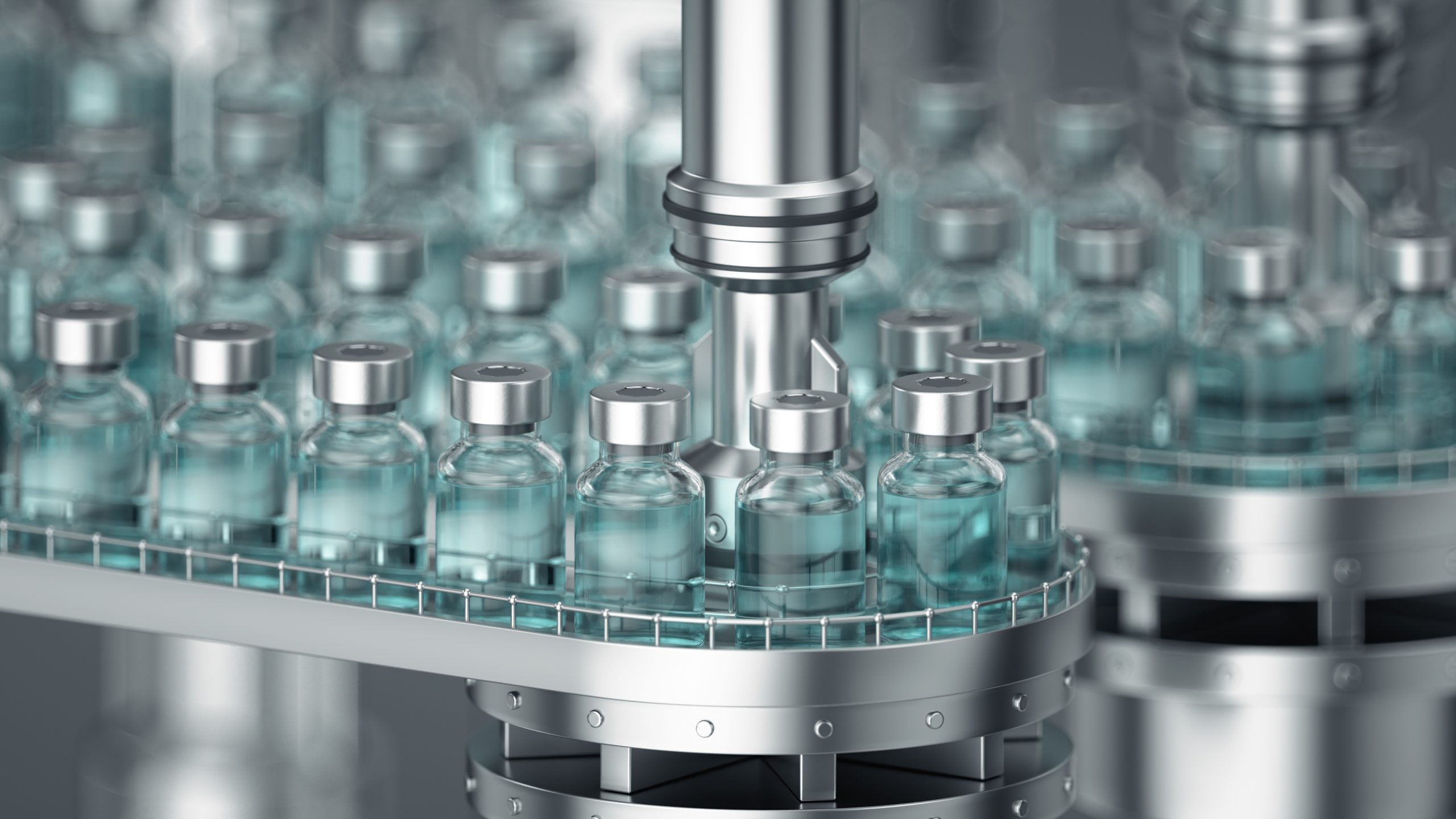
Pharmaceutical machinery needs to comply with the highest levels of sterilization to provide maximum safety to consumers and avoid microorganisms at any cost. There are several sterilization methods you can use in your pharmaceuticals production, the most common of which is thermal sterilization. Apart from this, it’s also possible to carry chemical or radiation sterilization.
In fact, in June 2022 the FDA started studying a plan to help implement new ways of sterilizing medical devices with radiation. Producers also need to choose equipment that they can fully sterilize, to be in line with GMP. After using a filling machine for parenterals, for instance, they have to be inspected one by one to conclude the production.
Let's talk about your project!